Late Fall Early Winter El Dorado County Peach Leaf Curl Treatment
Importance of Treating Peach and Nectarine Trees for Peach Leaf Curl
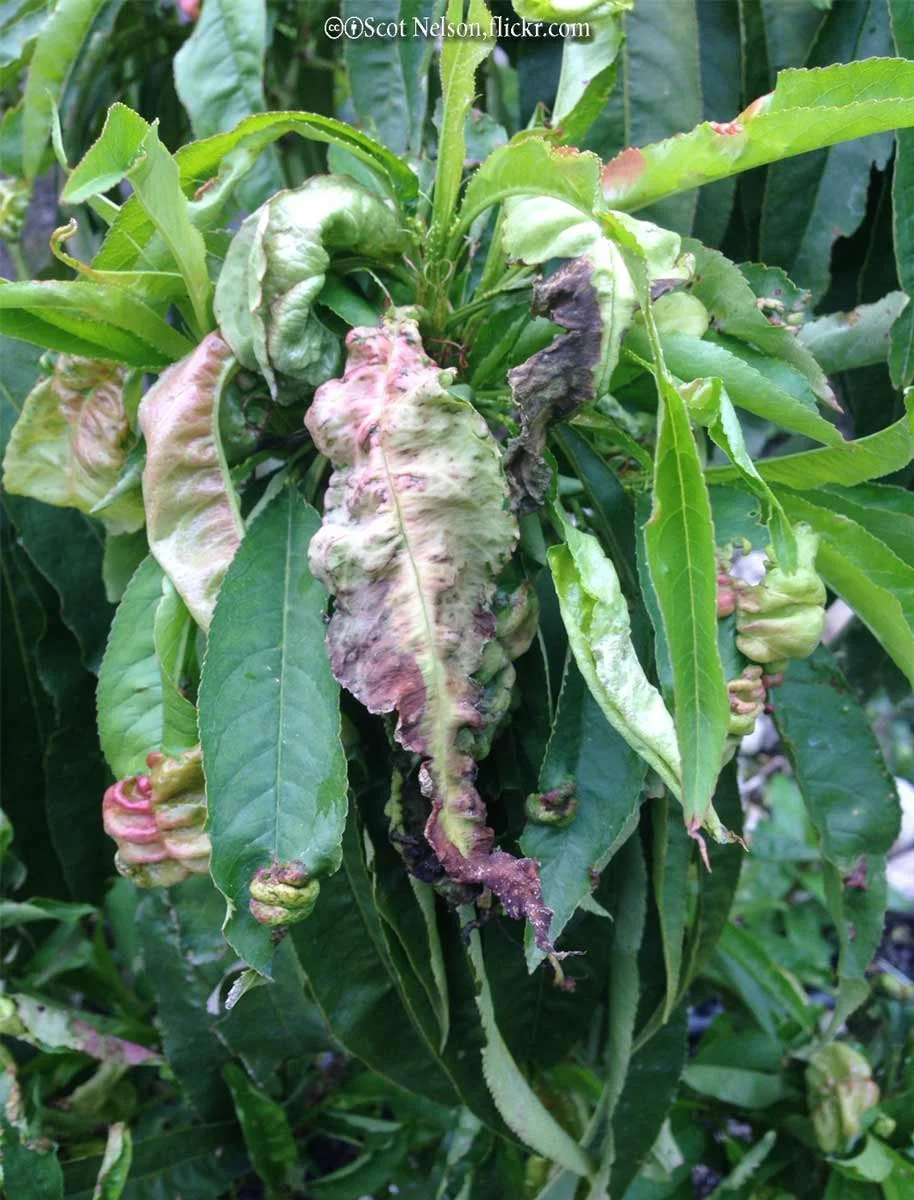
typical symptoms of Peach Leaf Curl
If you grow peach or nectarine trees, there's one fungal disease you need to know about: peach leaf curl (Taphrina deformans). This common yet devastating disease can transform a healthy, productive tree into a defoliated, weakened specimen in a single growing season. The good news? It's one of the most preventable tree diseases when you understand the timing and treatment methods. Please always remember The Label is the Law, any pesticide is to be used as labeled.
What is Peach Leaf Curl?
Peach leaf curl is a fungal disease that affects peaches, nectarines, and occasionally almonds and apricots. The fungus overwinters on the bark, in bud scales, and on tree surfaces, lying dormant until spring rains arrive. When conditions are right—typically during cool, wet weather in early spring—the fungal spores become active and infect emerging buds and young leaves.
Recognizing the Symptoms
The disease gets its name from the distinctive leaf distortion it causes. Infected leaves develop characteristic symptoms:
Early Stage:
Reddish or purple discoloration on young leaves
Puckering and thickening of leaf tissue
Distorted, curled leaves that fail to develop normally
Advanced Stage:
Severely twisted and thickened leaves with a leathery texture
Whitish or grayish powder on leaf surfaces (fungal spores)
Premature leaf drop, often by mid-spring or early summer
Stunted shoot growth and twig dieback
Reduced fruit production or complete crop loss
Infected trees often produce a second flush of leaves after the diseased ones drop, but this comes at a significant cost to the tree's energy reserves and overall health.
Why Treatment Matters
Immediate Impacts
Peach leaf curl doesn't just affect appearance—it has serious consequences for tree health and productivity:
Crop Loss: Infected trees typically produce little to no fruit in the affected year. Even if fruit develops, it may be misshapen, scarred, or fail to ripen properly.
Energy Depletion: When a tree loses its leaves and must regrow them, it exhausts valuable energy reserves that should be directed toward fruit production and winter hardiness preparation.
Weakened Defense: Stressed trees become more susceptible to other diseases, pests, and environmental stresses.
Long-Term Consequences
While a single year of peach leaf curl may not kill a mature tree, repeated infections take a cumulative toll:
Declining Vigor: Trees that suffer from peach leaf curl year after year gradually decline, producing less growth and fewer fruit each season.
Shortened Lifespan: Chronic stress from repeated infections can significantly reduce a tree's productive lifespan.
Increased Vulnerability: Weakened trees are more susceptible to winter injury, drought stress, and secondary infections from other pathogens.
Economic Loss: For home gardeners and commercial growers alike, the loss of fruit crops and potential tree replacement costs represent a significant financial burden.
The Treatment Window: Timing is Everything
Here's the critical fact that many growers miss: peach leaf curl cannot be effectively treated once symptoms appear in spring. By the time you see those telltale curled, reddened leaves, the infection has already taken hold, and fungicide applications will have little to no effect on the current season's infection.
The key to success lies in dormant season prevention. Fungicide applications must be made when trees are completely dormant—after all leaves have fallen in autumn and before buds begin to swell in spring. Most need to be applied during dry periods as well, so late fall to early winter is the prime time. Here in the Sierra Nevada foothills we frequently have dry falls or periods of dry spells between November-January which is the ideal time to treat your trees.
Optimal Application Timing
Fall Application: Apply fungicide in late fall after leaf drop is complete and before winter rains begin. This is often the most effective timing, as it provides protection before the fungus becomes active.
Winter Application: If you miss the fall window, a winter application during a dry spell can still be effective, provided buds have not yet begun to swell.
Early Spring Application: A final opportunity exists in very early spring before bud break, but this window is narrow and risky. Once buds begin to show green tissue, it's too late.
Critical Rule: Never apply treatment once buds have begun to open or green tissue is visible. At this point, the infection cycle has begun, and treatment will be ineffective.
Effective Treatment Options
Copper-Based Fungicides
Copper fungicides are the most commonly recommended and effective treatment for peach leaf curl prevention:
Types:
Copper sulfate
Copper hydroxide
Fixed copper formulations
Application: Apply thoroughly to all branch surfaces, covering bark, twigs, and bud scales. Two applications are often recommended: one in fall after leaf drop and another in late winter before bud swell.
Synthetic Fungicides
Certain synthetic fungicides can also provide effective control:
Chlorothalonil: A broad-spectrum fungicide effective against peach leaf curl when applied during dormancy. This is often applied on offset years to reduce the use of copper based fungicides as metal toxicity can build up in the soil from overapplication.
Organic Approaches
For organic growers, options include:
Copper-based products: Many copper formulations are approved for organic use.
Lime sulfur: Can be effective but has a strong odor and may cause temporary leaf burn if applied too close to bud break.
Cultural practices: While not a replacement for fungicide treatment, good sanitation and tree care can reduce disease pressure.
Biofungicides: Some Bacillus subtilis products are being explored for spring application. Specifically Seranade Max is registered for use against peach leaf curl.
Application Best Practices
To maximize treatment effectiveness:
Thorough Coverage: Apply fungicide to complete saturation, covering all bark surfaces, branch crotches, and developing buds. The fungus overwinters on these surfaces, so incomplete coverage leaves vulnerable areas.
Weather Timing: Apply on a dry day when rain isn't forecast for at least 24-48 hours. Rain can wash away treatment before it dries and becomes effective.
Multiple Applications: Two applications during the dormant season provide better protection than one. Space them several weeks apart for optimal coverage.
Equipment: Use appropriate spraying equipment that provides good coverage and penetration into branch crotches and around bud scales.
Safety: Always wear appropriate protective equipment and follow all label instructions for mixing, application, and safety precautions.
Beyond Fungicides: Integrated Management
While dormant season fungicide applications are the cornerstone of peach leaf curl prevention, additional practices support tree health:
Site Selection: Plant peach and nectarine trees in locations with good air circulation and avoid low-lying areas where cool, moist air settles.
Variety Selection: Some peach and nectarine varieties show more resistance to peach leaf curl, though none are completely immune. Research varieties suited to your region.
Pruning: Maintain open tree canopies that allow air circulation and rapid drying of foliage. Prune during dormancy and remove any infected wood.
Sanitation: Rake and remove fallen infected leaves to reduce fungal spore reservoirs, though this alone won't prevent infection.
Tree Vigor: Maintain overall tree health through proper fertilization, irrigation, and care. Healthy trees are better equipped to withstand stress and recover from infections.
Monitoring: Inspect trees regularly in early spring. While you can't treat active infections, early detection helps you plan for better prevention the following year.
What If You Forget to Treat?
If you miss the treatment window and peach leaf curl develops, focus on helping your tree recover:
Remove Infected Leaves: While this won't cure the current infection, removing severely infected leaves reduces spore production and may slightly reduce disease spread.
Support Tree Health: Ensure adequate water and nutrients to help the tree produce healthy replacement foliage.
Plan for Next Year: Mark your calendar now for dormant season treatment applications. Set reminders for fall and late winter to ensure you don't miss the window again.
Don't Apply Fungicide: Once symptoms appear, fungicide applications are ineffective and wasteful. Save your efforts for dormant season prevention.
The Bottom Line
Peach leaf curl is entirely preventable with proper dormant season fungicide applications, yet it remains one of the most common diseases affecting home peach and nectarine trees. The difference between a healthy, productive tree and one that struggles year after year often comes down to two well-timed fungicide applications.
For home gardeners and commercial growers alike, treating for peach leaf curl isn't optional—it's essential tree care that protects your investment, ensures fruit production, and maintains tree health for years to come. The relatively small effort and expense of dormant season treatment pays dividends in healthy foliage, abundant crops, and vigorous trees.
Don't wait until you see those characteristic curled, reddened leaves to take action. By then, it's too late for the current season. Instead, mark your calendar now for fall and late winter applications, and make peach leaf curl prevention a routine part of your orchard care. Your trees—and your fruit harvest—will thank you.
